


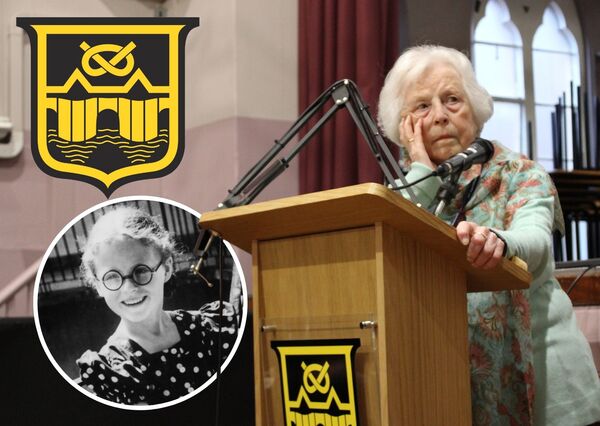

A 93-year-old Holocaust survivor told stunned students at King Edward VI Handsworth Grammar School For Boys how she narrowly avoided being killed at Auschwitz when she was a young girl, in a fascinating talk.
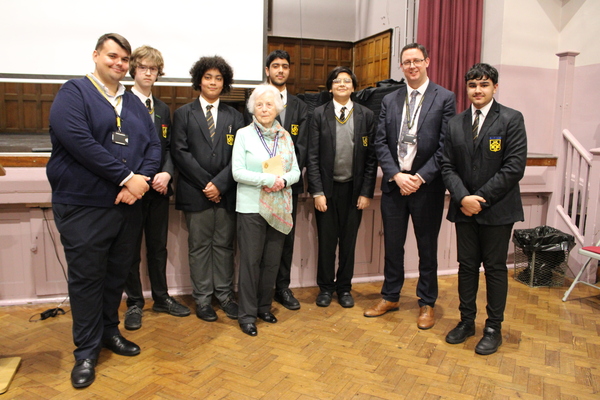
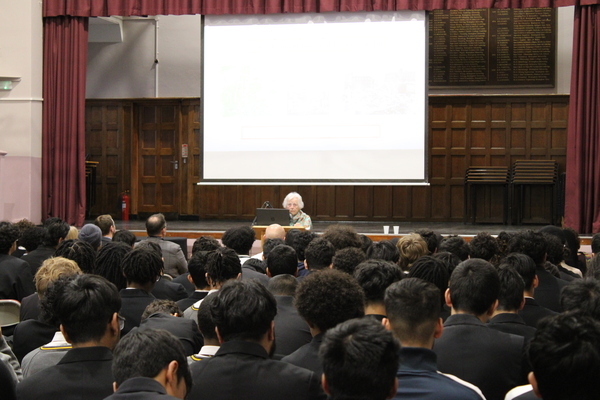
The respected school invited renowned engineer Dr Agnes Kaposi MBE to share her story in the run up to Holocaust Memorial Day and opened its doors to students from King Edward VI Handsworth Wood Girls’ Academy and John Henry Newman Catholic College to share the experience.
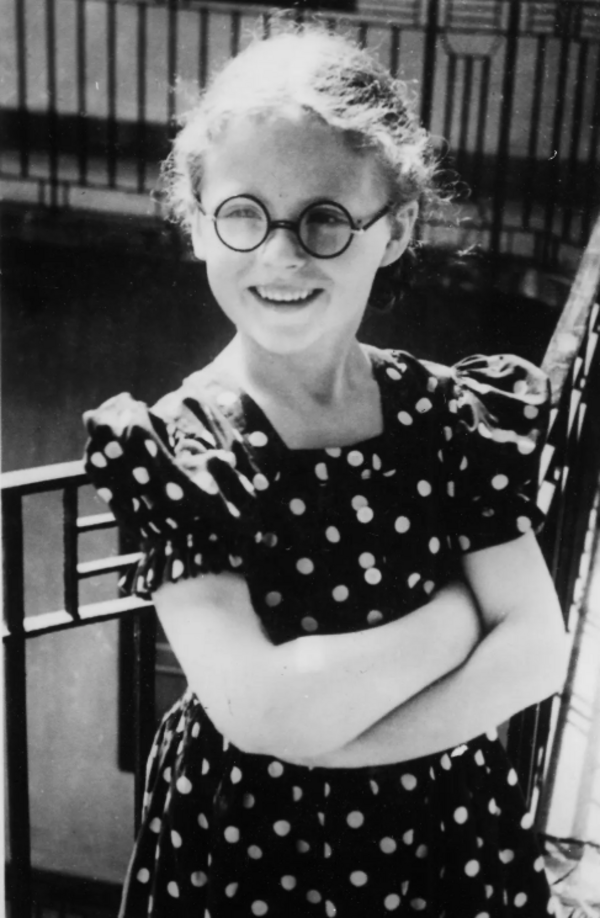
Born in 1932, Agnes not only told the children about her experiences during the Holocaust and Nazi occupation, but also her teenage years under Stalin in communist Hungary, and her life and work in the UK.
Dr Kaposi told the students how she narrowly avoided being killed as an 11-year-old old, when she was deported from a Hungarian ghetto to Auschwitz. Fortunately, before the train could reach its destination, it was diverted to Austria, saving the lives of Agnes and her family. She worked as a slave labourer in Austria until liberation.
With an impressive career that lasted well into her 70s, Dr Kaposi, now 93, stands as a proud educator against hatred, an MBE, a published author of multiple books, and a dedicated grandmother to five grandchildren.
Dr Kaposi said: “I am not a typical Holocaust survivor. When I talk about the Holocaust, I always put it in a broader context, as there are so many ways people murder and disadvantage each other.
“It’s so important for schools to hold events like this because society as a whole must learn to live together. The sooner you broach those topics in life, the better.
“I’m a proponent of a new education method when it comes to the Holocaust. I don’t just want people to listen to a sad story – I want them to approach it as an interactive teaching experience where they can draw their own conclusions and identify with the person who has been harmed.
After Hitler’s defeat, with the Soviets establishing an oppressive communist regime in Hungary, Agnes was selected for her intelligence to go to university and become an engineer. She reflected that while she didn’t have a choice, she is ultimately very satisfied with her career.
The 1956 Hungarian Uprising gave the freshly-graduated Agnes a chance to escape to the UK, where she continued her work as a distinguished engineer.
She shared with the students the adversities she overcame in the workplace as a female scientist and boss in the mid-twentieth century.
Dr Kaposi also shared anecdotes featured in her most recent book, Harmage and Hope, of her diverse friends from around the globe who have faced various forms of discrimination.
She said: “I want the children to know the value of collaborating with people who are different to them. I wrote Harmage and Hope, in collaboration with a wide variety of people sharing their anecdotes of discrimination from across the world, in the hope that all kinds of people will be inspired to live and work together.”
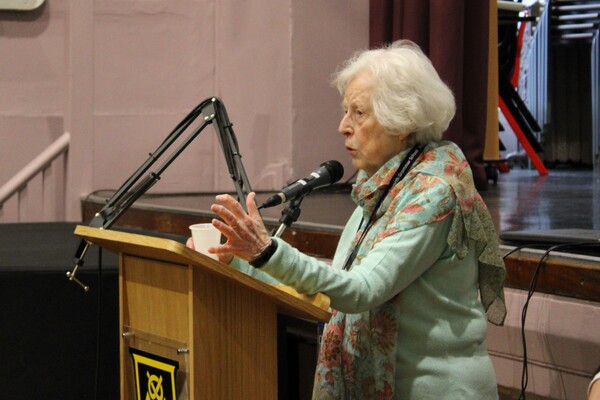
After Agnes had shared her story, the students had the opportunity to ask her questions.
Dr Kaposi said: “The children were fantastic. Their questions showed insight, intelligence and sensibility, and a great depth of understanding. It’s a credit to the education they receive, because some of the questions were beyond the expected maturity of students their age.”
Gjovaun Johnson, 16, said: “Today we got to hear a firsthand piece of history. To have someone come into school and tell us about a moment that was so pivotal in history is one of a kind. For us to have the chance to spread the message she gave us about diversity and prejudice is amazing.”
Matthew Wang, 16, said: “I enjoyed learning about how she went through two different extreme regimes, living through Nazism and communism. She really persevered in life, even though it wasn’t easy.”
Jayden Facey-August, 17, added: “I’m taking home a different outlook on Nazism in Europe, having learned about the Hungarian side of the Holocaust. There’s a lot of focus on Poland as the centre of the Holocaust, which is important, but embracing the history of smaller countries is essential too. She really made me think.”
The school’s Head of Social Sciences, Ed Harvey, arranged the event through a personal connection with Dr Kaposi.
Mr Harvey said: “I believe the students are a real credit to the school, to Agnes’s story and to the message that she wants to tell. They listened and engaged with her so considerately. They really reflected on her experiences, and hopefully they’ll be able to take lessons from Agnes which they can bring into their everyday lives.
“I think it’s valuable that the students didn’t just take away the horror of Dr Kaposi’s story, but the positive lessons that can be taken from someone with her outlook.”
Headteacher Tim Johnson said: “It was an inspirational talk. I think Dr Kaposi’s message of hope, after all the discrimination she faced throughout her life, was a thought-provoking and positive thing for our students to hear.
“This event perfectly aligns with our school’s core values, particularly of respect and community. She encouraged our students to think deeply about things and use any opportunity they can to try and create a better world.”
Dr Kaposi added: “What I appreciate most about doing these talks is when children come to me and say I made them think.”
For more on King Edward VI Handsworth Grammar School For Boys, click here.
To visit the King Edward VI Handsworth Grammar School For Boys website, click here.